
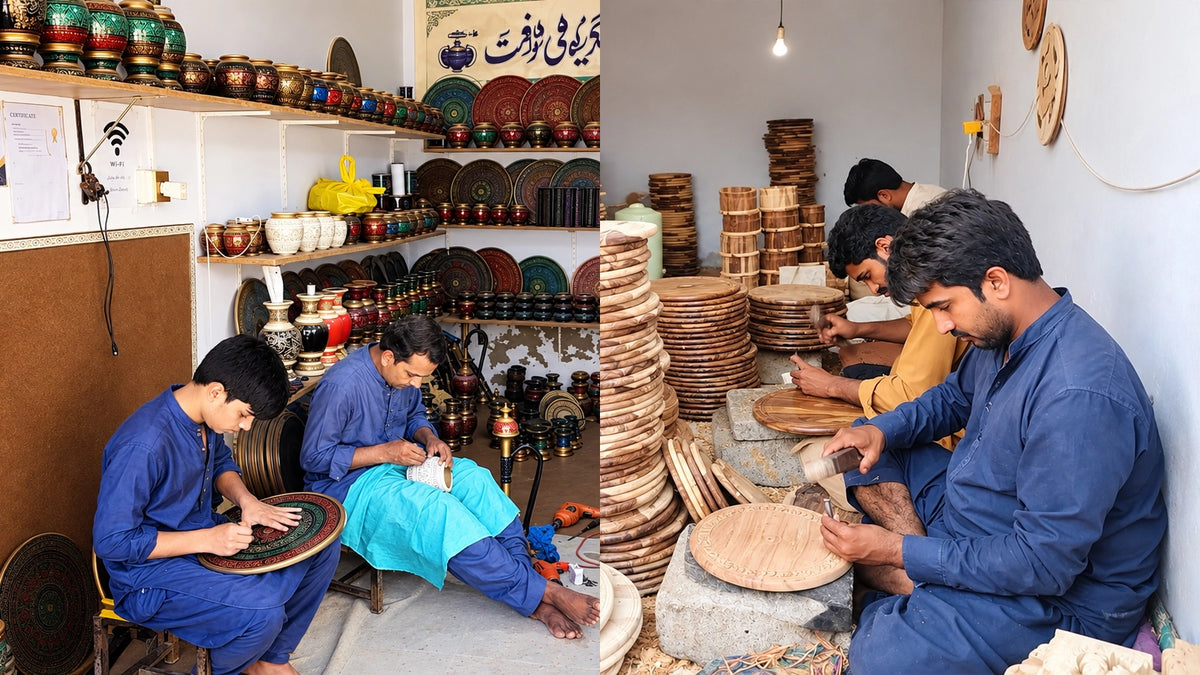


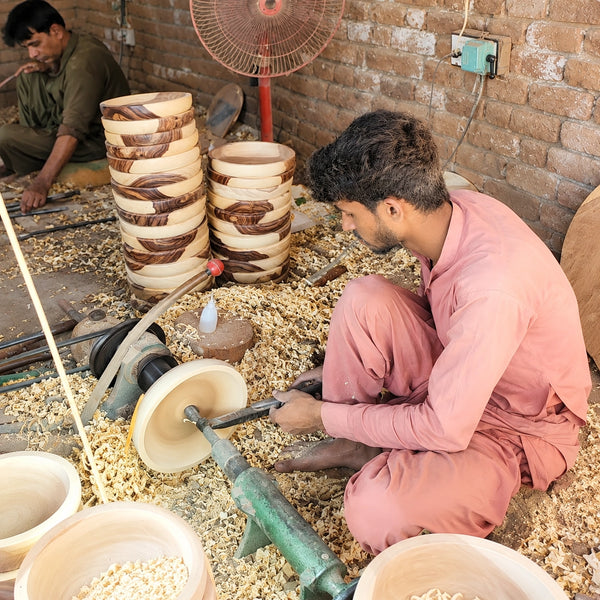

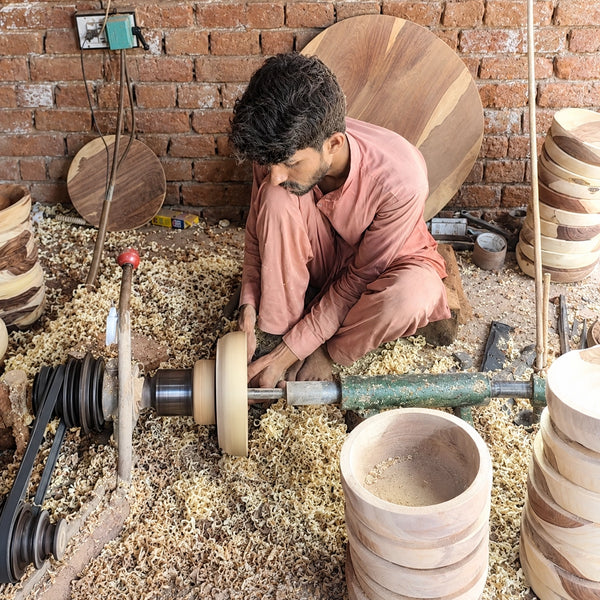
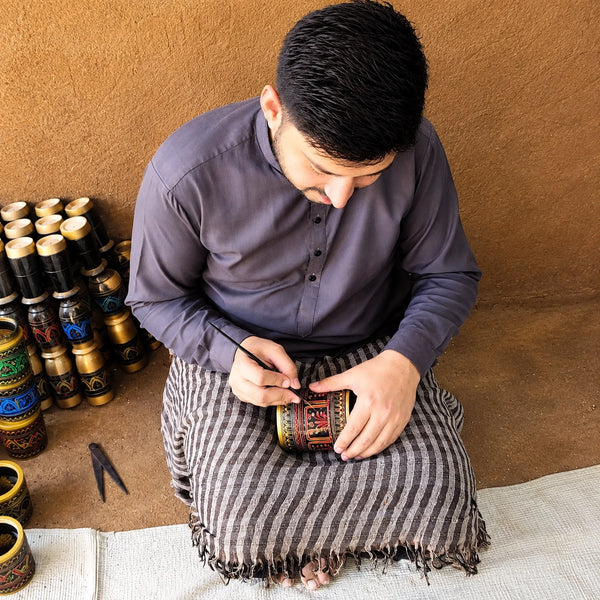
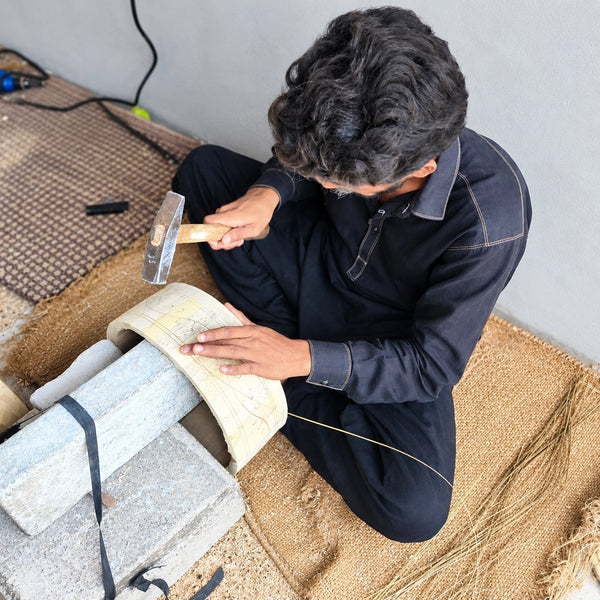


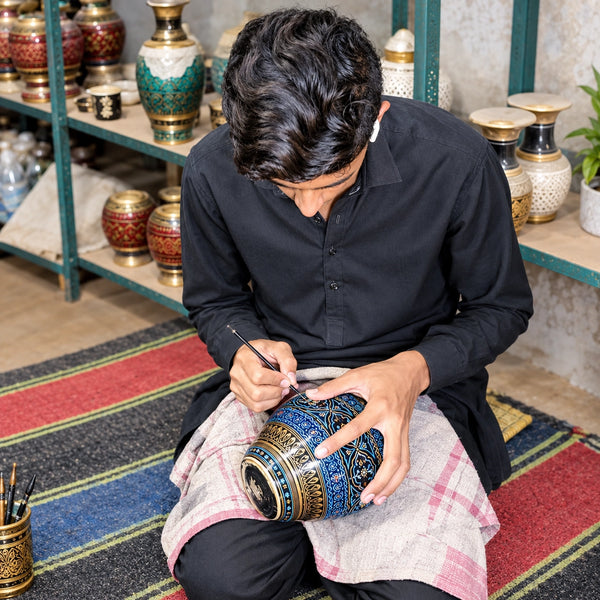
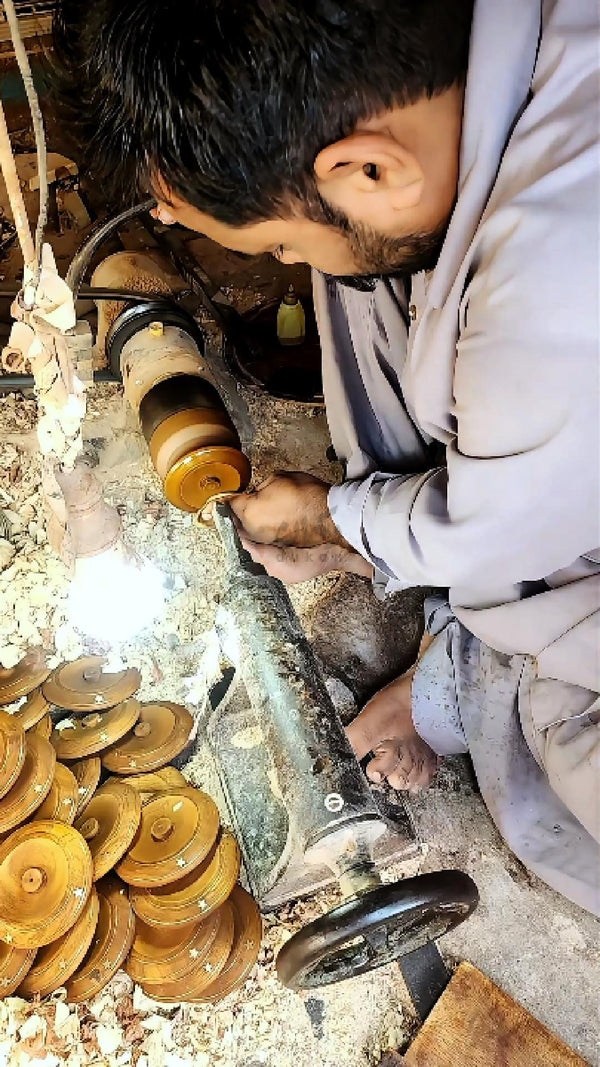
Wooden handicrafts in Pakistan are not made in factories. They are made in small workshops, by men who learned the work from their fathers and uncles, in towns where the tap of a chisel is as ordinary as the call to prayer. iDukan.pk exists to carry that work out of those workshops and into your home. These are the hands behind it.
A Craft Older Than the Country
Pakistan's woodworking tradition is older than Pakistan itself. In Chiniot, a town on the banks of the Chenab, craftsmen have been carving wood since the Mughal era, when emperors commissioned them for palace doors, thrones and mosques. Chinioti masons and carvers are credited with work on the Taj Mahal in Agra and the Wazir Khan Mosque in Lahore. In 1805, Chiniot's naqqash artists were invited to Amritsar to decorate the interior of the Golden Temple.
That skill never left. An estimated 100,000 people in Chiniot alone are linked to the furniture and handicraft trade today, and nearby towns such as Sillanwali have been woodcraft centres since Mughal times. Further south in Multan, the art of Naqashi has been practised for centuries on wood, walls and leather, its deep blues and turquoises carried in along the trade routes from Central Asia, Turkey and Iran.
Our karigars work in small towns across Punjab, inside this living tradition. They are not reviving a lost craft. They are continuing one.
Chiniot's craftsmen shaped the Taj Mahal and the Wazir Khan Mosque. Their descendants are still working today.
The Art of the Chisel: Hand Carving
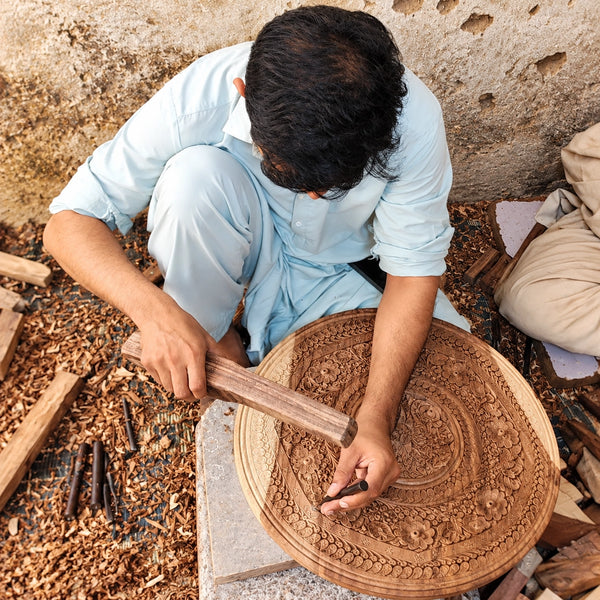
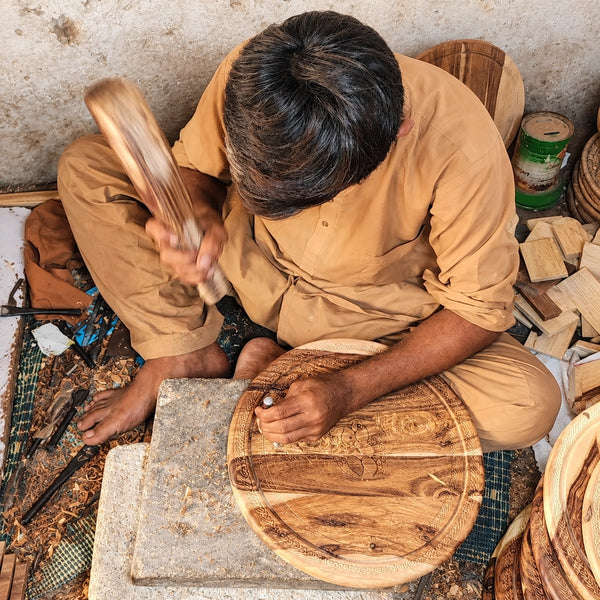
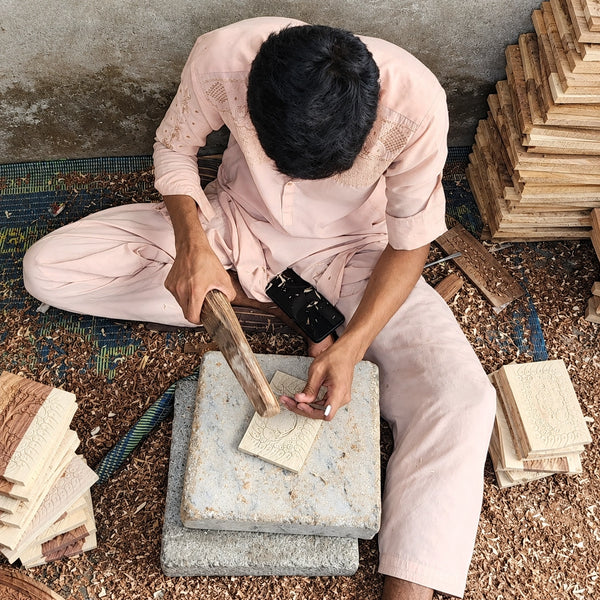
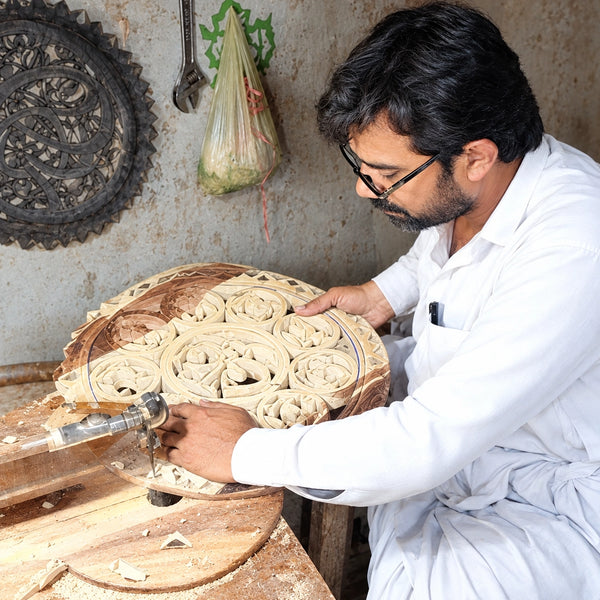
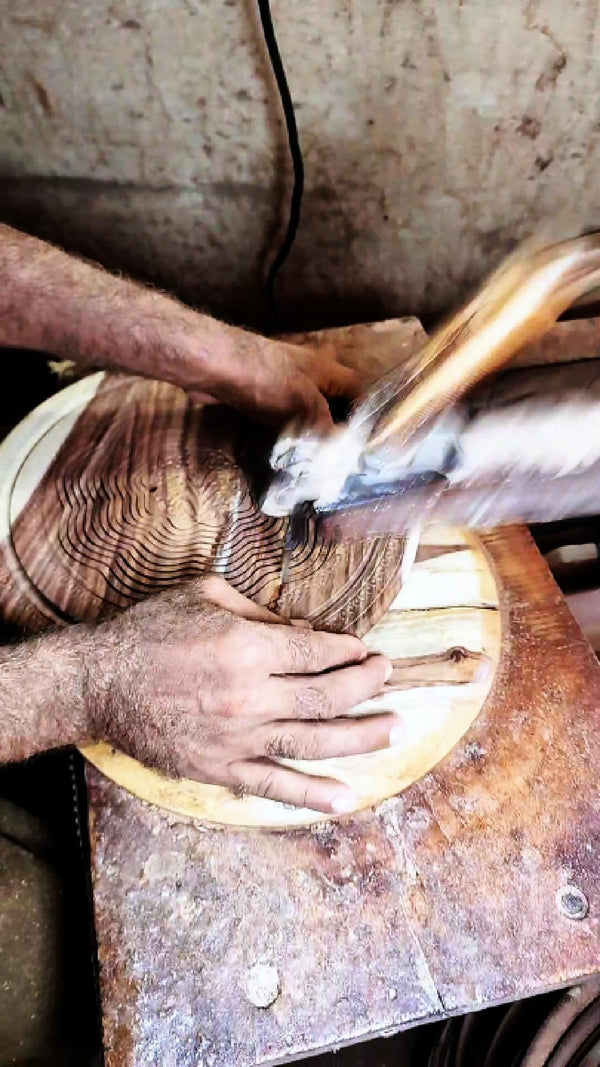
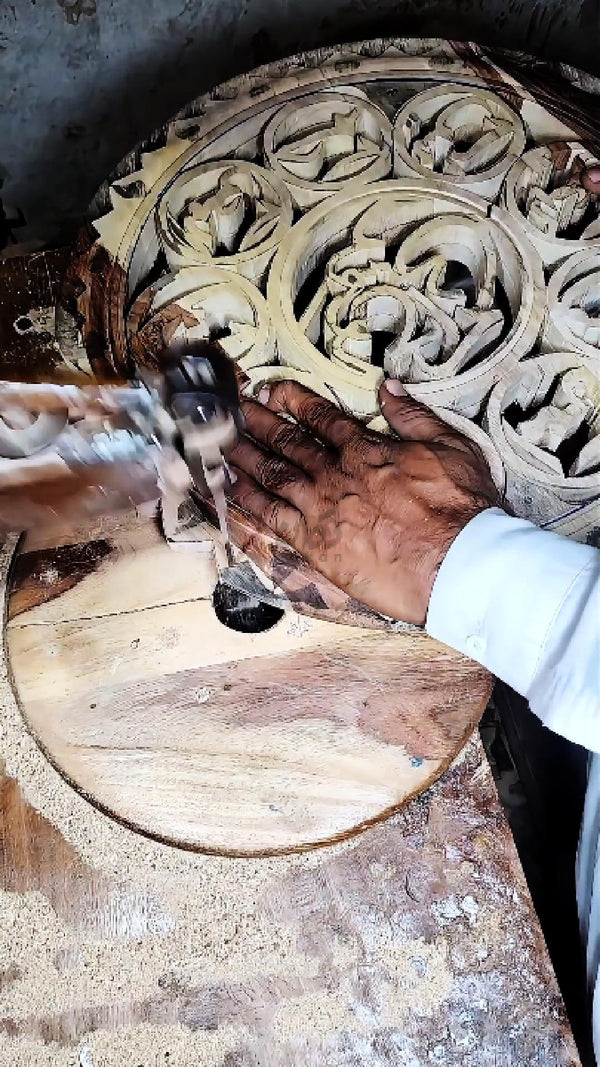
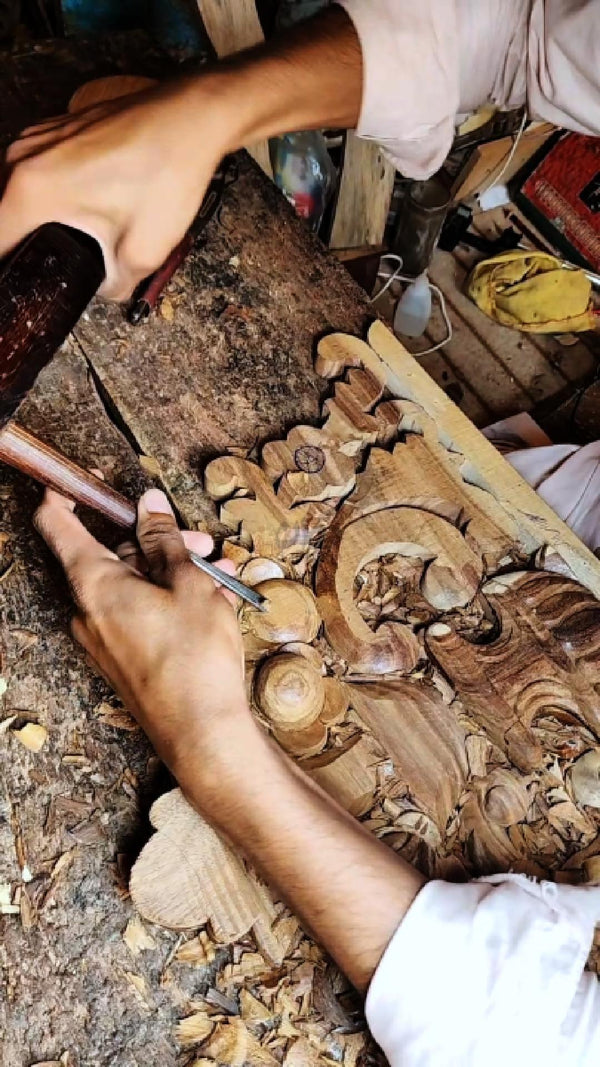
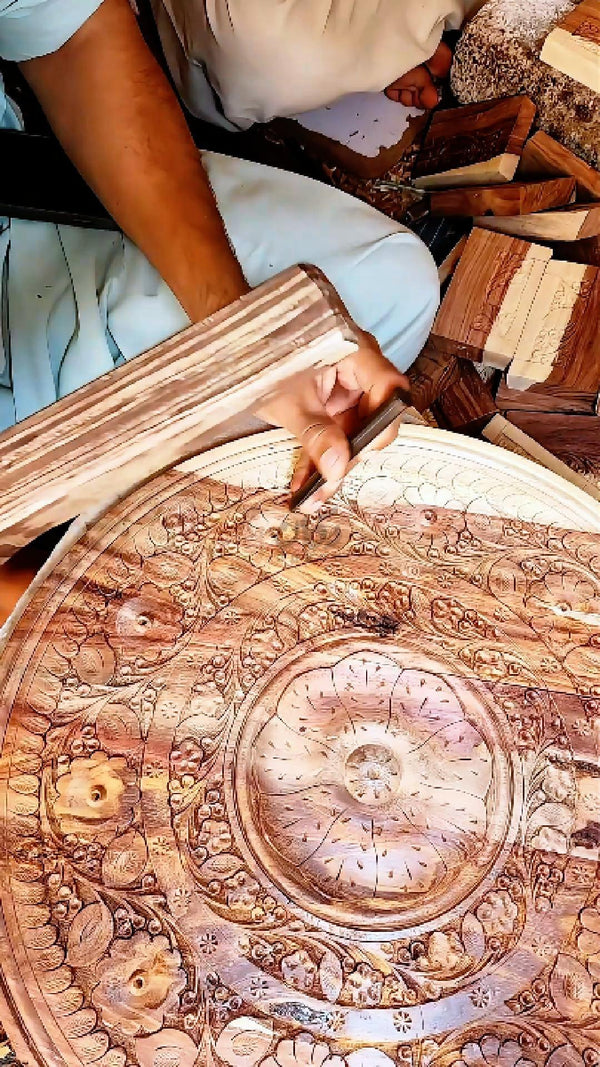
Carving is where a plain plank becomes something worth keeping. Working from a practised eye rather than a printed template, our karigars cut floral vines, jaali lattice and geometry directly into solid wood, with tools that have barely changed in centuries.
Sheesham, known internationally as Indian rosewood, is the wood of choice. It grows in Punjab, it is dense and strong, and its deep grain is what gives a carved piece its depth. A single panel can hold a craftsman's full attention for hours, and one wrong cut cannot be undone.
Naqashi: Painting With a Fine Brush
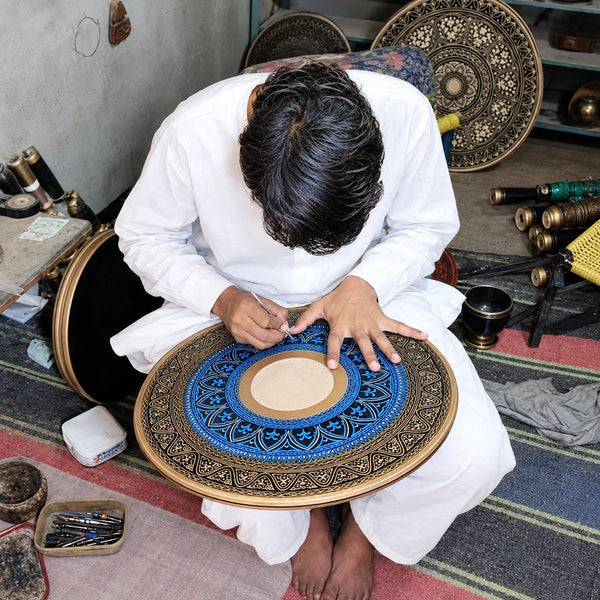
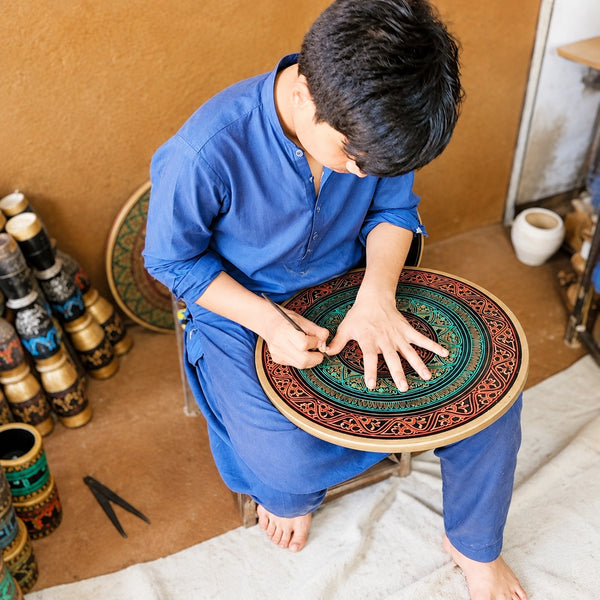
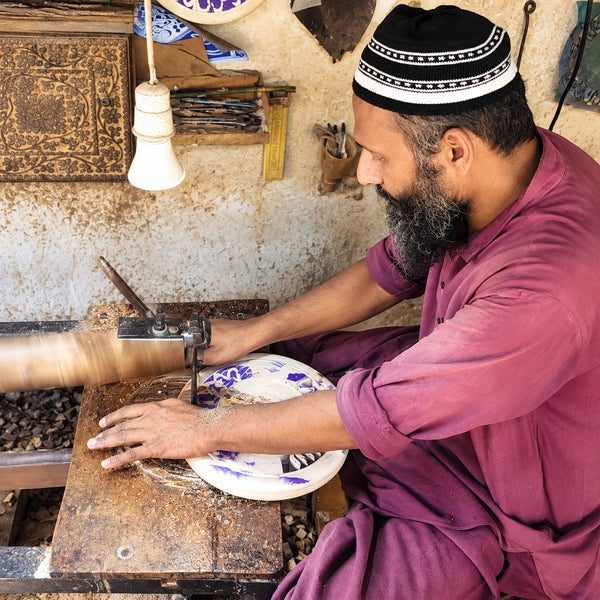
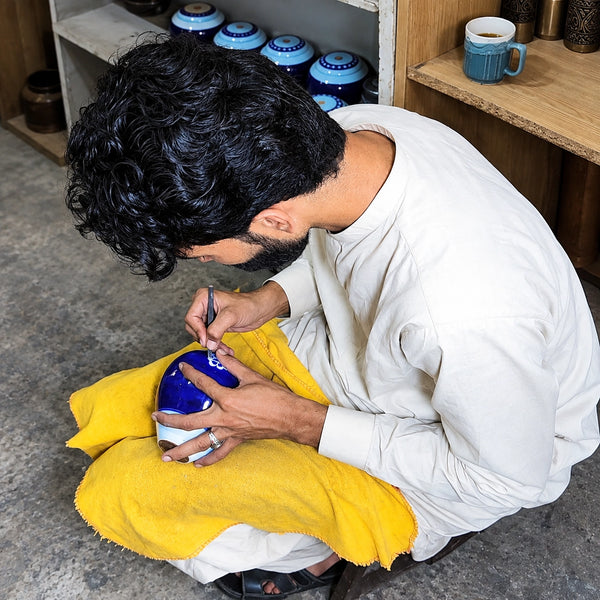
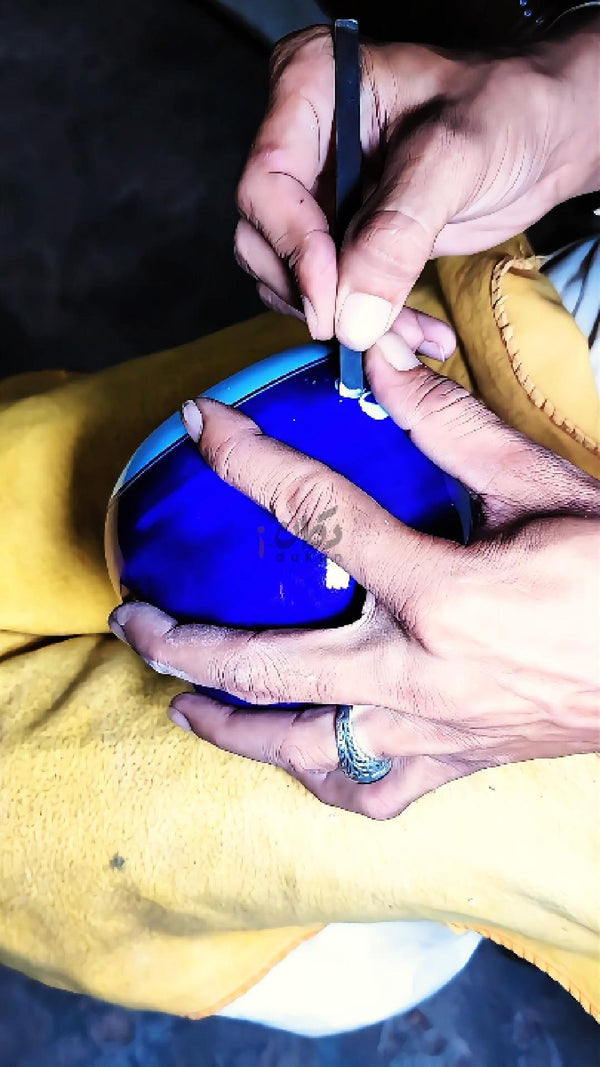
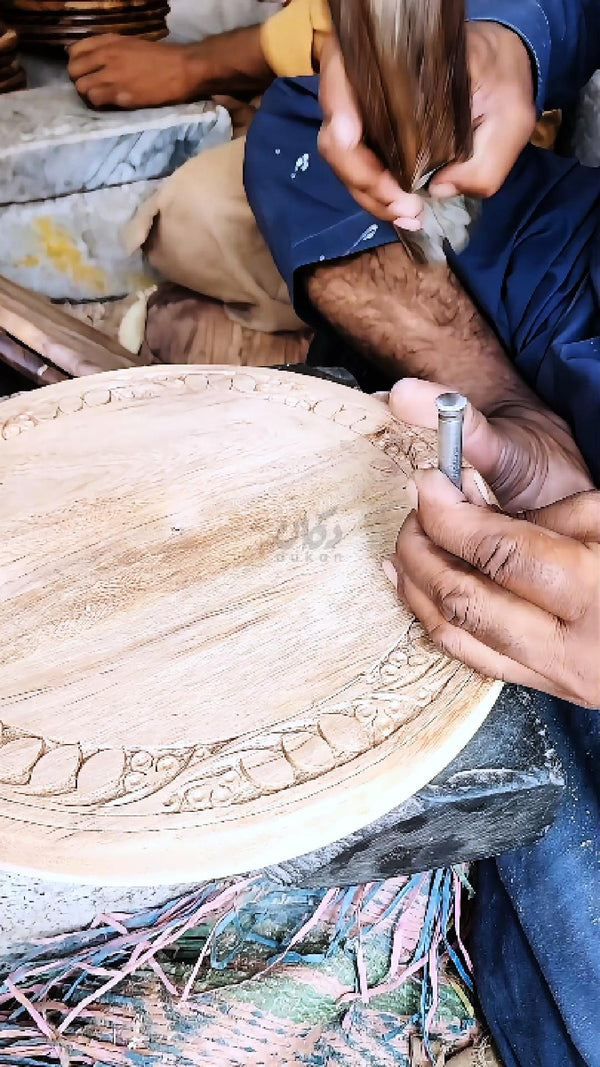
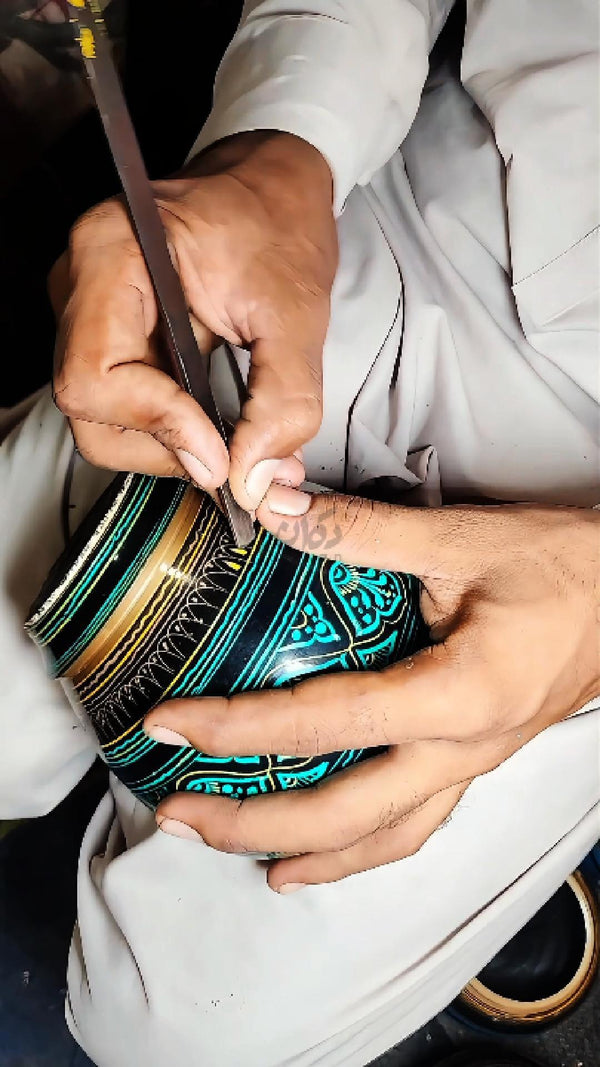
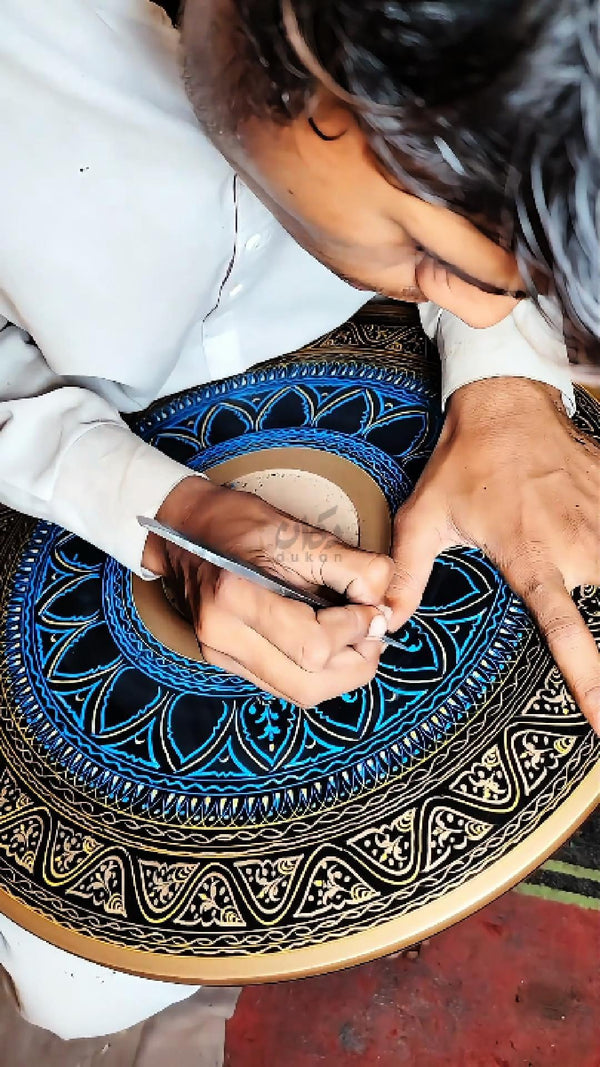
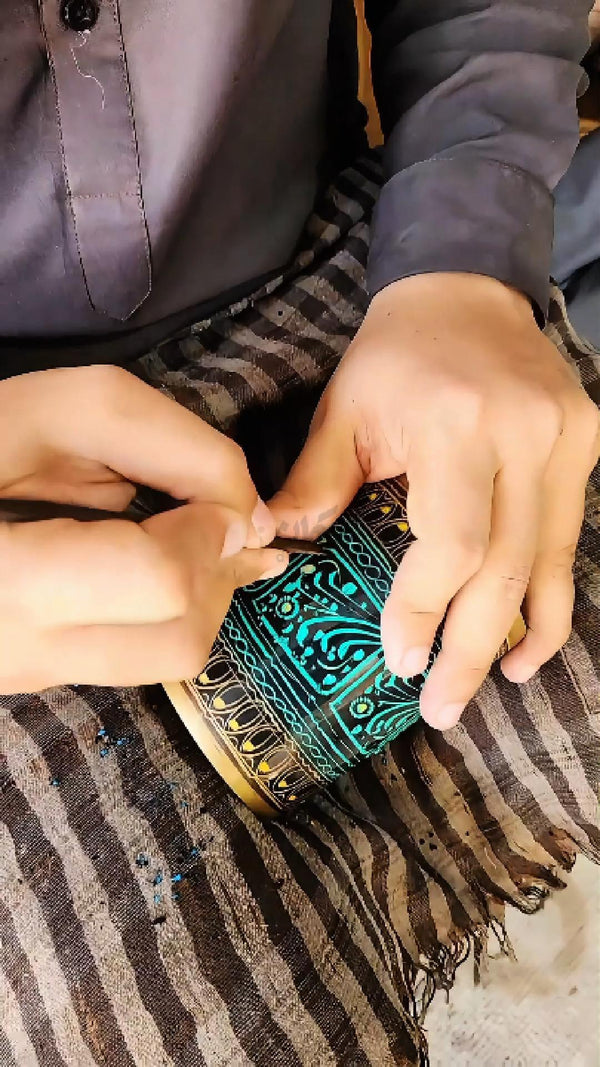
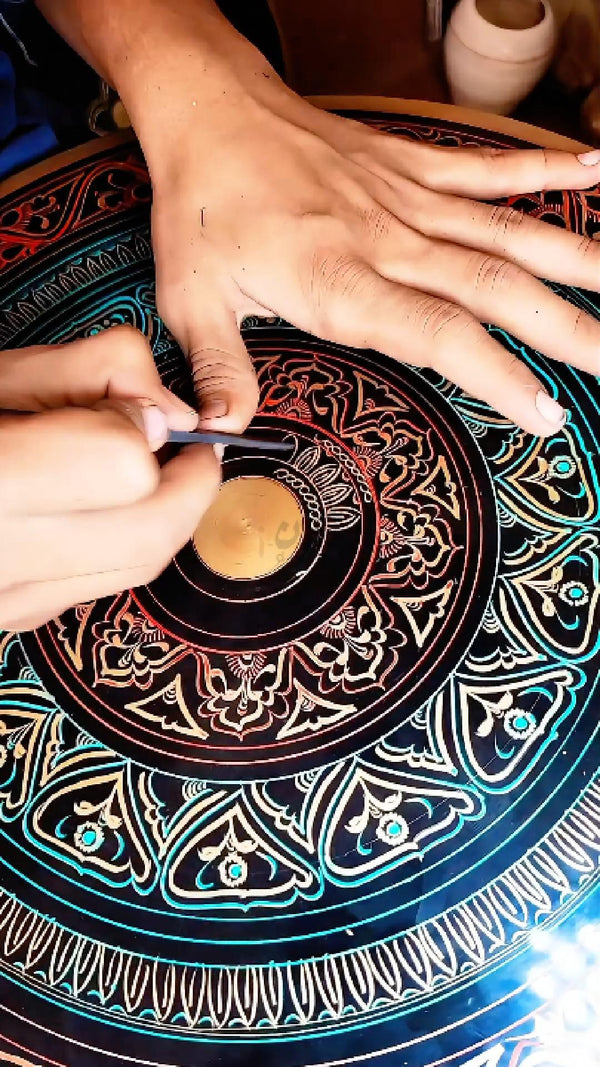
Naqashi is the art of painted ornament, and it asks for a different kind of patience. The naqash works with a qalam, a fine brush traditionally made from squirrel hair, laying down floral motifs, arabesques and geometry in cobalt, turquoise, gold and ivory.
It is the same visual language you see on the shrines of Multan and across the ceilings of old havelis, scaled down to a coffee table or a tray you use every day. Each design is painted by hand, layer over layer, so two pieces of one design are never identical.
Brass Work: A Line of Gold in the Grain
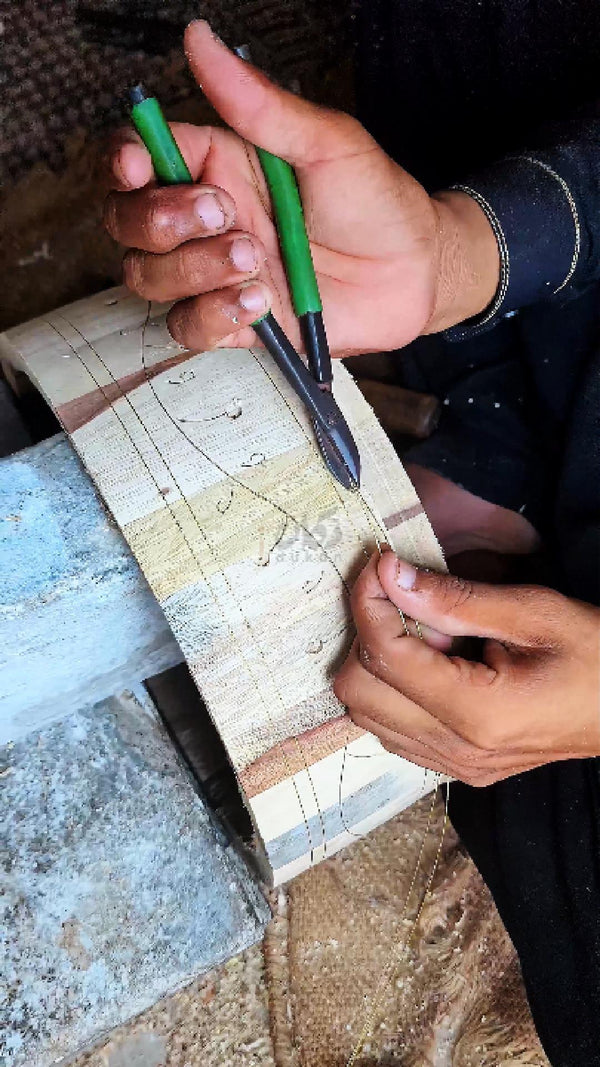
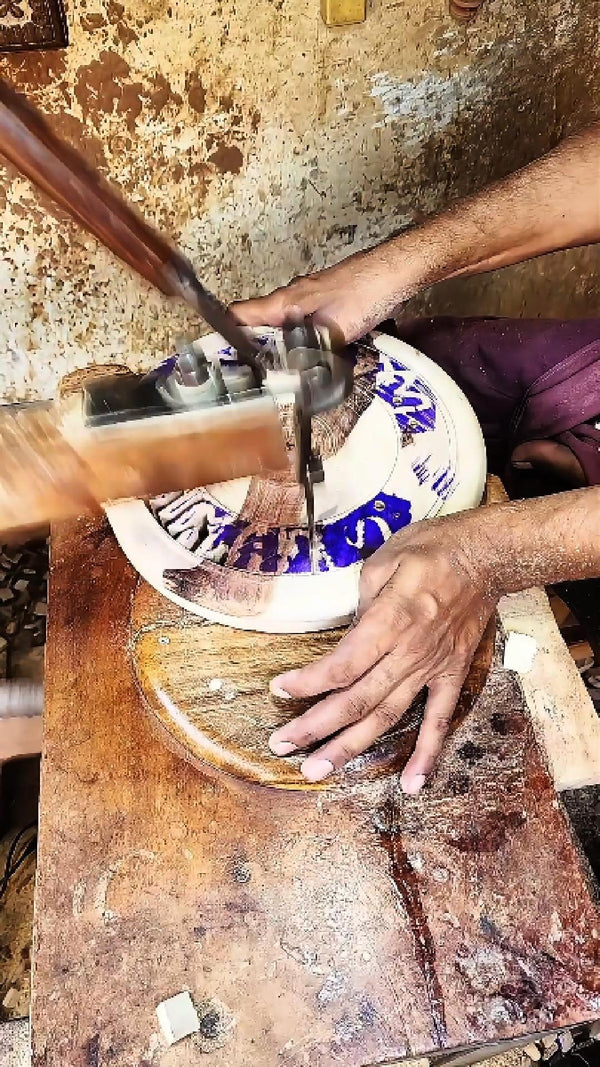
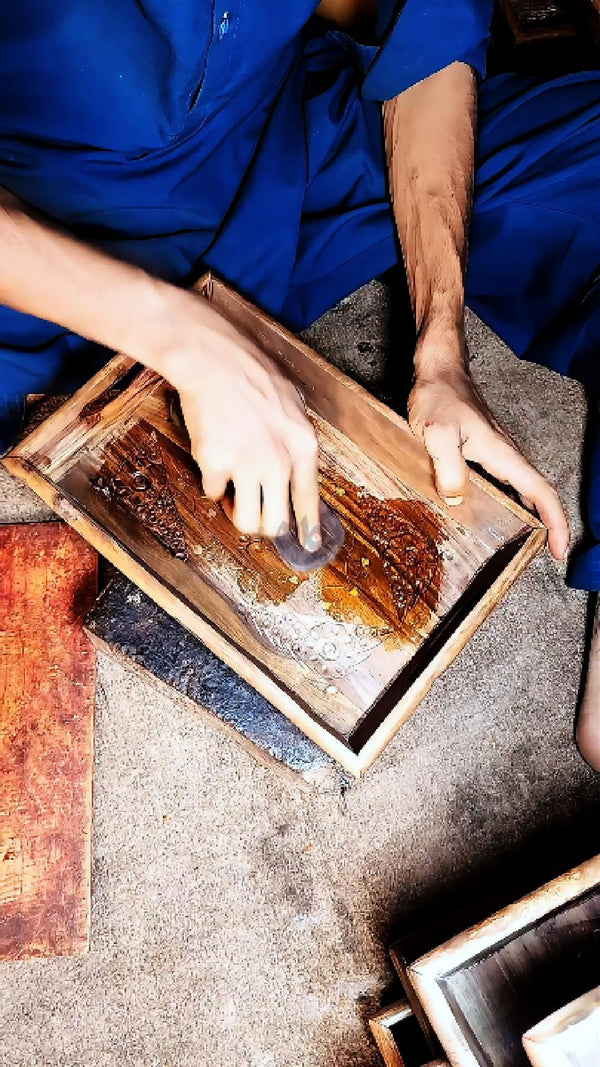
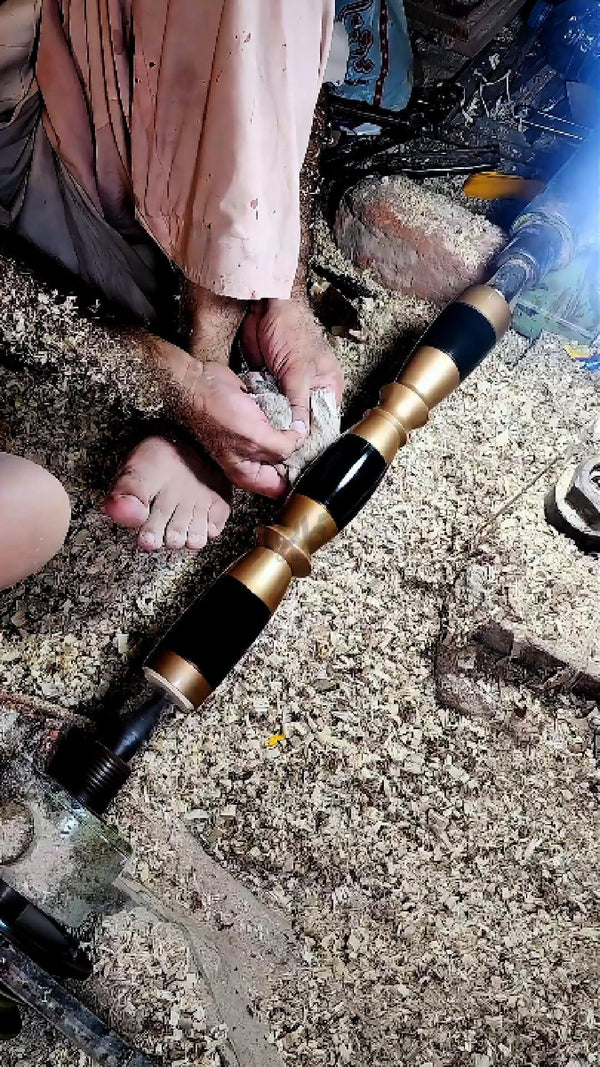
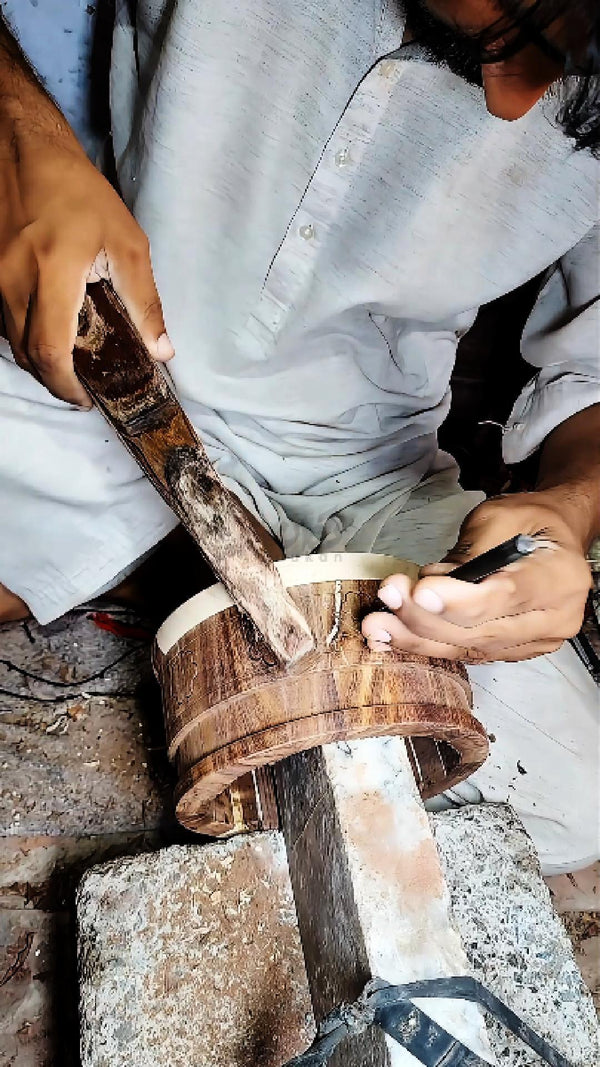
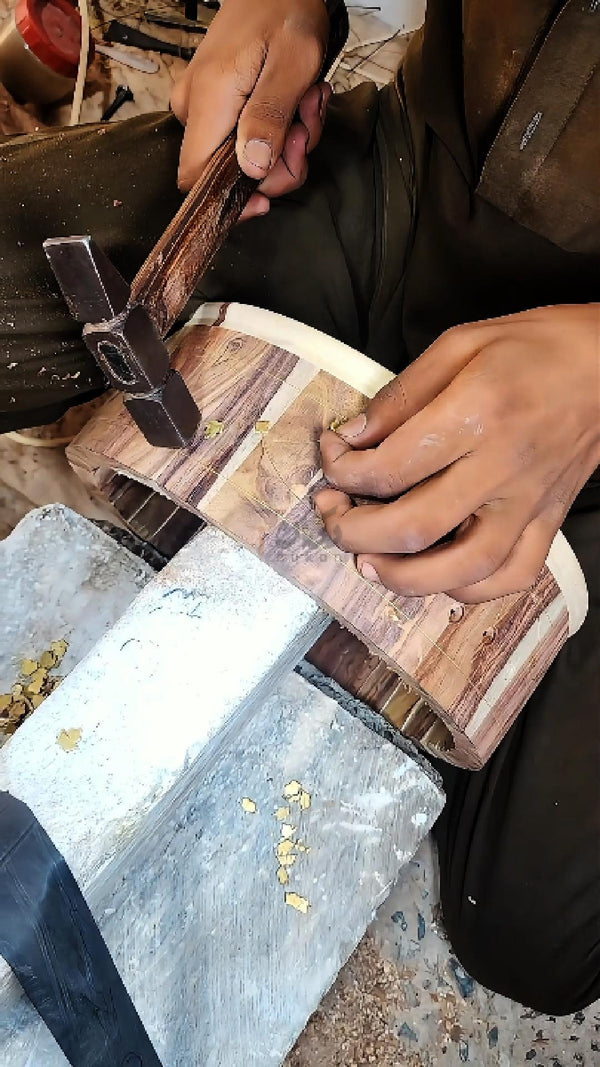
Brass work is Chiniot's signature, and it is the detail people notice last and remember longest. The pattern is drawn onto the wood, cut by hand, and the brass set into place piece by piece until a line of gold runs through the grain.
It is slow, exacting work, and it is why brass-detailed pieces have always sat at the finer end of Pakistani woodcraft, passed down rather than replaced.
The Hands Behind the Work
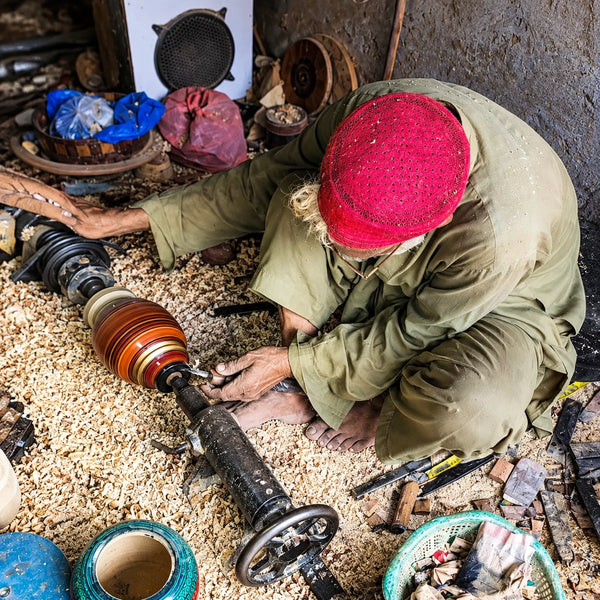
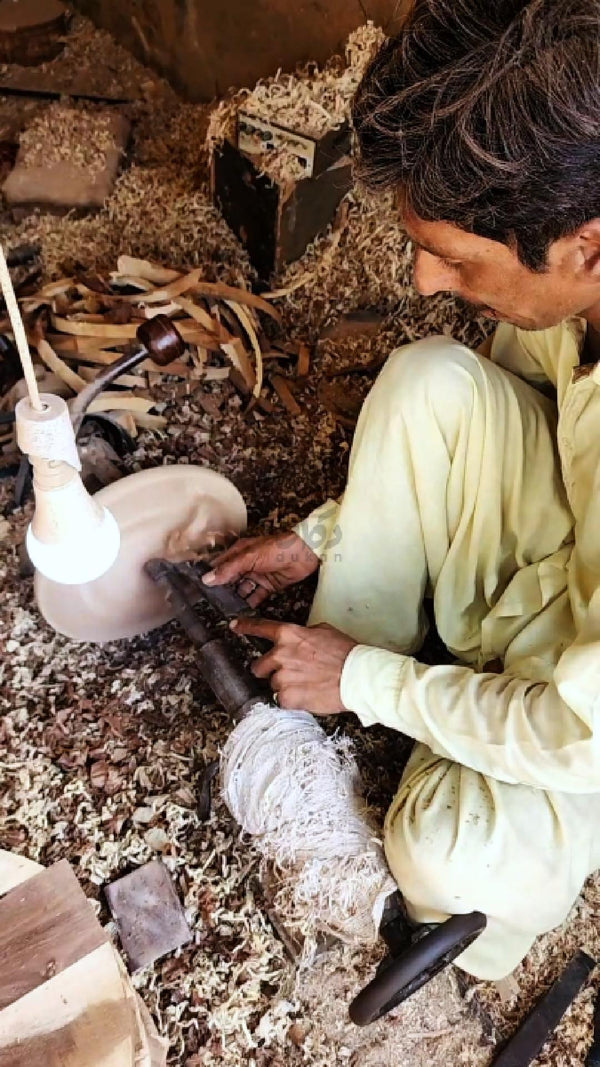
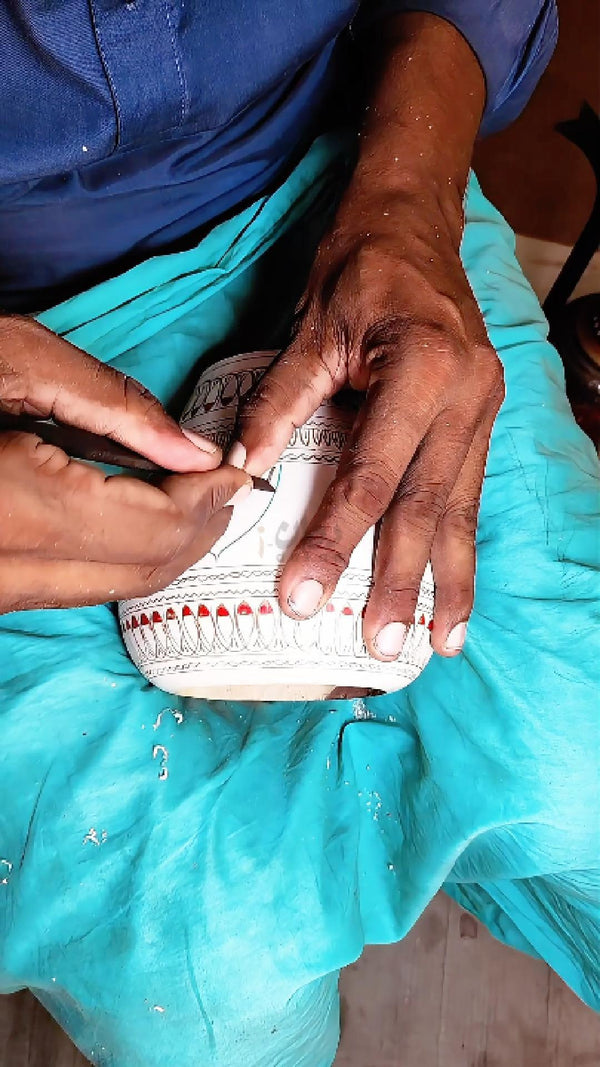
Behind each craft is a person. Billu Bhai, one of our karigars, is around forty and learned his craft from his uncle, in the same small workshop where he still works today. Many of the men we work with learned from fathers and grandfathers, artisans who carried these skills with them when they made Pakistan their home in 1947.
For generations, their work stayed inside the local market: sold in a bazaar, bought by a neighbour, rarely travelling past the next district. Our part is straightforward. We carry it to homes across Pakistan, so the craft has a future as well as a past.
Why No Two Pieces Are Alike
Because everything is made by hand from natural wood, no two pieces are ever quite alike. The grain runs differently, the tone shifts, the brushstrokes fall in their own way. That is not a flaw to be corrected. It is the signature of a person rather than a machine.
We also protect what our karigars make. Every piece of wood is fumigated before crafting begins, and we stand behind that with a one-year free replacement warranty against insect damage.
Every order placed at iDukan.pk keeps a chisel moving, a brush loaded and a workshop open for one more day. That is the quiet thing you take home alongside the piece itself.
Shop the Handcrafted Collection Read Our Story
Jo Banaye Har Ghar Ko Khaas.
Frequently Asked Questions
What are wooden handicrafts in Pakistan?
Wooden handicrafts in Pakistan are pieces shaped, carved, painted or brass-detailed by hand, most often from sheesham wood. iDukan.pk works with karigars in the small towns of Punjab who carry these traditions.
Which city in Pakistan is famous for wooden handicrafts?
Chiniot in Punjab is the best known centre for wooden handicrafts in Pakistan, famous since the Mughal era for carving, brass work and inlay. Sillanwali and Multan are also long-established craft towns.
What is Naqashi art?
Naqashi is the traditional art of hand-painted ornament, practised for centuries in Multan on wood, walls and leather. The naqash uses a fine brush to paint floral and geometric patterns, often in blues and turquoise.
Which wood is used for Pakistani wooden handicrafts?
Sheesham, also known as Indian rosewood, is the most widely used. It grows in Punjab and is valued for its strength, its deep grain, and how well it takes carving and polish.
Are iDukan.pk products really handmade?
Yes. Every iDukan.pk piece is carved, painted or brass-detailed by hand by karigars in Punjab, which is why the grain, tone and pattern vary slightly from piece to piece.
Does iDukan.pk protect its wooden products against termites?
Yes. iDukan.pk fumigates its wood before crafting begins and offers a one-year free replacement warranty against insect damage.


